Let's Meet
Click here if you need to contact me
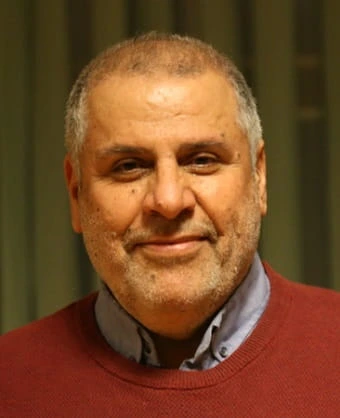
Hello,
My name is Cemal Atila. I was born in 1968 in Qeracêre, a village in the Varto district of Muş. I lived there until I was 15, after which I left. To put it briefly, I am a village boy with a middle-school education… Today, I live in Istanbul. I work as an instructor at a cultural center that provides education in ethnic and historical languages, dances, and music in and around our country. I teach traditional Greek dances, Zaza folk dances, as well as Kurdish and Zazaki language courses. If you have a little time, we can get to know each other in more detail...
My journey began at age 15 when I ran away from my village to Istanbul. Throughout this long, ongoing adventure, I have drifted from place to place to arrive where I am today. Over the course of forty-odd years, I have worked in a thousand and one kinds of good and bad jobs you could or couldn't imagine. I have met people from vastly different social and cultural backgrounds in completely unrelated work environments. For instance, while working at an ice cream shop in Büyükada during two summers, I had the chance to closely know not only the upper bourgeoisie of Turkey but also our Greek, Armenian, and Jewish citizens. Likewise, during the years I distributed soft drinks around Bayrampaşa, I met our Balkan population in that area, discovering their languages, cultures, and beautiful music. Due partly to a personal interest stemming from being the child of a somewhat political family, and partly to the influence of being in such diverse environments, different social and political issues, languages, cultures, and ethnicities became an enduring source of fascination for me over time. Therefore, through individual effort, I tried to independently know, understand, and learn various intellectual schools, political movements, cultures, and languages.
While working at a restaurant in Harbiye, I would lose myself staring at photos of London, Paris, and New York in the display windows of airline offices where I delivered meals, dreaming, "I must go there, I must travel the world!" Understandably, my initial goal, like that of any young person in our country, was to learn a foreign language and make it to a Western country. As a first step westward, I enrolled in an English course. In the autumn of 1985, dear friends, an English course was so expensive that it swallowed the salary, tips, and next few paychecks of a restaurant busboy! Moreover, it wasn't as fast or efficient as I expected and needed; so I could only continue for three months. But luckily, one of my instructors gave me a golden piece of advice: "Go to the Aegean or Mediterranean coasts, find a job where you will use the language, and you’ll be speaking it in no time."
Thus, I began a life that spanned about six years along the coastline from Kuşadası to Side, but predominantly in Fethiye and Kaş. Moving up from dishwashing to yachting, and from there to unlicensed tour guiding, my English improved significantly during these years, and I also learned some Italian. However, after working in the same environment with people from different European countries for a few years, my opinion of Western civilization and its people changed entirely. I didn't get along well with the Western colleagues I worked with at the tourism agencies; we argued frequently, and our debates would quickly turn into the classic East-West conflict, perhaps in part due to my youthful obsession with anti-imperialism. While having a hard time getting along with Western friends, even here in my own country, what would my state be like in their country where I would be an immigrant and a foreigner? Consequently, I completely abandoned my project of going to a Western country. Since tourism environments no longer fed my soul, I returned to Istanbul, my main headquarters...
Before we proceed, I would like to draw your attention to something here. I definitely do not want to be misunderstood as being anti-Western or an enemy of the West. As you may know, in Turkey—and generally in the Middle East and the Global South—there are two extreme emotions toward the West: either admiration or hatred! I feel neither. Quite contrary, I like Western culture, and it has had a huge influence on me. I try to approach the West the same way an average Western social critic would. In other words, I believe that while the West has contributed very important values to humanity, it has also committed grave sins. In fact, I hold this view not just for the West, but for all countries. I believe this will already be clear from the tone of my writing, but I still wanted to emphasize it specifically.
As life flowed by, I gradually began to use what I had learned in tourism in other fields—relatively more social, political, and cultural areas. During this period, I began working as a driver-translator for foreign journalists, news agencies, and members of foreign NGOs coming to Istanbul for various reasons. This work required me to translate and write dense literary materials such as news, articles, and reports, which introduced me to written translation. After a while, I focused primarily on written translation. This process, which began with translating articles for various magazines, soon reached its inevitable conclusion: I started translating books. After the hyperactive and rather degenerated environment of tourism, translation felt like a very serene, respectable, and profound occupation. I felt that by translating intellectual and historical texts that were little known in Turkey at the time, I was making a significant contribution to our country’s world of thought and culture. For about ten years, I lived working from home, translating 19 books and hundreds of articles into Turkish. While it was initially very difficult for me to find translation work because I only had a middle-school diploma, I eventually became a translator pursued by publishers who wanted to reserve almost my entire life. But at the end of ten years, I hit the same dead end in this profession; translation began to bruise my soul. Because translation is a kind of life imprisonment: sit in a room, read, think, write. It is an unbearable burden! Furthermore, the intellectual arrogance that inevitably accompanies translation was extremely repulsive to me; I could never envision myself as that kind of person. Thus, all the conditions had formed for me to ask for my discharge from this profession...
Following the translation years that had virtually crippled my mind and body, I began a search for intense physicality. Eventually, a completely different field caught my attention—one that none of my friends could associate with me or give me a chance in: Dance. Right in the year 2000, along with the new millennium, I was stepping into a brand-new arena myself. The various Latin dance courses I initially attended quickly fell out of my favor. Both the highly degenerative nature of the dances and the superficiality of the dance environments soon pushed me away from Latin dances. Yet, it left behind a very important legacy; a short-term Sirtaki workshop I attended merged with the intense interest in the Greek world that had begun back in my Aegean years, opening a whole new chapter for me...
Thus, in the early 2000s, I began entering the Greek music and dance circles in Istanbul. The first discoveries were incredibly disappointing; out of the grand Byzantine era, all that was left were one or two dances performed quite degenerately in various taverns, and that was it. Something felt profoundly wrong here. Istanbul’s pseudo-Greek dance atmosphere (or rather, its obsession with "Syrtaki"!) bore almost no traces of the deep ocean of Greek culture, music, and dance; a taste of which I had discovered during my years by the Aegean, working alongside Greek friends. Frankly, the conditions were ripe for me to leave that environment quickly. However, the patronizing attitudes of some Greek friends I consulted during my research ("You're just a provincial peasant, what business do you have with Greek dances?") probably fired me up in the opposite direction. I began to hold on tighter. After intensive searches where I returned empty-handed from many meetings, an opportunity finally arose to work for a while with a Greek dance instructor who had been appointed to the Phanar Greek Orthodox College from Greece. With this, I took my first real step into the world of Greek dance.
Once what I learned reached a certain level of accumulation, a new line of work opened up before me—one that hadn't even crossed my mind initially: teaching Greek dances. Back then, the environment in Istanbul was so barren and mediocre that it was impossible even to use the term "Greek dances"; instead, concepts like Sirtaki or Greek dance were used. I became the first person to use the term "Greek dances" in Turkey, and as might be expected, I faced serious problems that occasionally escalated to physical interventions. After teaching dance classes at other institutions and venues for about two years, I established my own dance studio in 2004. This expanded my room to maneuver; I connected directly with well-established dance institutions in Greece, and authentic materials regarding the field began to flow in heavily. Right after that, I invited dance instructors from Greece, and my Greek dance repertoire expanded rapidly. Also, during this period I began studying the Greek language on my own. Today, I can speak, read, and write Greek to a certain extent. I am far from being fluent, but it is still enough for me to express my thoughts and feelings.
During these years when everything was progressing beautifully, a bad habit of mine relapsed, and I got involved in publishing again. According to my observations, there were very few sources on the phenomenon of dance in Turkey and no predicament publications at all. Therefore, it was necessary to bring a dance magazine to the country! I named it "Sempatik Dans" (Sympathetic Dance). Printed in color on 80 pages of glossy paper, with incredibly rich and powerful content, Turkey’s first and only Dance Culture and Physical Arts Magazine lasted for a total of 2.5 years and 18 issues. It was a magnificent gain for our country's cultural life, but a great spiritual and especially financial ruin for me. It took a long time to heal my wounds…
After the dance magazine fiasco, I accelerated my Greek dance work again and founded Turkey's first Greek Dance Troupe (Antropia) in the autumn of 2007. Lasting for about three years, Antropia allowed Greek dances to step out of our small studio and reach much wider audiences through two major shows, a series of small performances, and workshops. We appeared in the Turkish and Greek press as a unique example of cultural tolerance. But Antropia also brought me plenty of headaches; as if the insults, abuse, and threats directed at us from the outside weren't enough, we also frequently experienced internal socio-political crises throughout our troupe's work. You might not believe it, but in those years (2006-2008), doing a simple Greek dance in Turkey was an incredibly political act; you could very easily be labeled first as a Greek admirer, and then as a traitor (a situation that still persists to some extent today). Ultimately, these internal and external disputes wore me out, and I dissolved our troupe—which was a candidate to do beautiful things for both sides of the Aegean—and breathed a sigh of relief…
In our lives, we often fail to realize that when one door closes, another is about to crack open. The dissolution of Antropia sparked new flashes of insight in my mind. The fact that cultures living side by side in the same geography were so isolated from, and even opposed to, one another was a frustrating situation we all encountered everywhere, and perhaps this was the point to focus on. Besides, it was time for me to seek new horizons in my own life, which was beginning to show signs of becoming routine…
With these thoughts and feelings, I founded the Geoaktif Cultural Center in 2010 to bring all surrounding cultures together under one roof. The goal was to create an environment where different cultures that spend a lifetime together could discover one another and grow closer. Now, 16 years later, I believe we have achieved this perfectly at Geoaktif. Political, ethnic, religious, and class identities that could never come together within the country's usual political and social climate unite in a fairytale harmony at Geoaktif. Needless to say, behind this rosy picture lay a vast amount of unrequited labor, conflicts that occasionally sharpened between different identities, and an endless struggle against the exclusionary attitudes that are a chronic problem in our country. An Azerbaijani might scold us for opening an Armenian course; someone might accuse us of separatism for opening a Kurdish or Zaza dance course; a Bosnian might view a Serbian course as an insult to themselves. Believe me, my last 15 years have been spent mediating between these groups and witnessing how these factions, who initially looked askance at each other, became close as can be over time...
Geoaktif continues its operations today with courses and events on current and historical cultures within and around Turkey. With next-generation young friends taking on a slightly more active role, I have recently started digging through old notebooks again. On my newly created YouTube channel, I want to focus on areas like ethnicity, language, and culture, alongside familiar global issues. Furthermore, my mother tongue, Zazaki, is one of the languages facing the danger of extinction in our country; therefore, I feel the need to work a bit more on the Zaza people and Zazaki.
Let me touch upon my relationship with Zazaki as well. It is my mother tongue, and thus one of the languages I speak fluently. I first started writing short articles in Zazaki in various magazines in the early 1990s. Later, in 1996, I hosted the first Zazaki radio program in Turkey's history on a station called Çevre Radyo in Istanbul. This was a massive event for that time; its echoes and impact were widespread. After the program ran for about 7 months, our brand-new RTÜK (Radio and Television Supreme Council) issued a warning penalty to the radio station, and my program came to an end. Perhaps I should write about this radio program era in a separate article altogether, because it was a very interesting, tragicomic, but ultimately very impactful event. Afterwards, I continued my work regarding Zazaki in different fields. In 2011, I took part in founding Zaza-Der in Istanbul, the first official Zaza institution in Turkey, and I am still a board member of this association. I continue to deal with all kinds of big, small, serious, trivial, and random matters you can think of regarding Zazaki…
Taking this opportunity, I would also like to state how I intellectually view these matters. Issues like language, culture, and ethnicity always create an area of tension and conflict, both in our country and worldwide. I believe it is possible and necessary to handle these issues from a completely different perspective, without turning them into an element of tension as much as possible. We are ending the first quarter of the twenty-first century. Huge changes are occurring in our lives in terms of values. Our view of humans, animals, and nature is changing radically; when necessary, we become millions flooding the squares to keep a single tree alive. We try to act more respectfully, tolerantly, and delicately toward our environment. Therefore, we need to show the same performance in other areas of our lives. We, who sometimes mobilize as an entire neighborhood to save a wounded bird, surely cannot resolve our cultural, religious, and ethnic differences by attacking each other with axes as they did 500 years ago, right?
In my opinion, if we can view all the cultural, ethnic, and religious diversity in our country and our world not as an element of conflict and competition, but as a collective creation of humanity—that is, as belonging to us—our perspective will change significantly. Next, every nation, every ethnic group needs to abandon claims of superiority and grandeur. For years, I have witnessed that when a little humility, plenty of tolerance, and intense mutual interaction dominate the environment, many prejudices can be broken. Another perspective could be this: when we look around us, the performance of the world's peoples on fundamental human issues is roughly the same. In terms of political governance preferences, relations with property, and human virtues or flaws, though they are not identical, the peoples of the world exhibit a highly similar, highly common behavioral model. That is why I say we should not overindulge any nation or ethnic group, including my own Zaza people! We should not sanctify anyone, nor grant anyone endless credit! But in the same way, we must not ignore, exclude, or demean anyone.
Because, dear friends, you never know who will do you the greatest harm in this life! Just as you can experience harm from the outside, you can sometimes experience it from those closest to you. We can take this in an ethnic sense as well. There are many examples of this in history and today; a country that grinds its teeth against an imaginary external enemy for years is sometimes destroyed from within by a terrible civil war. Therefore, maintaining a bit of distance from one's own cultural, religious, and ethnic affiliation is beneficial for all of humanity. Let me also add this; in general, ethnic issues can narrow a person's horizon severely; it can virtually imprison a person inside a valley, within the language, culture, and value system there. I believe we should not put ourselves into such a straitjacket by our own hands.
To sum it up, when I look at my Zaza people both from my own perspective and through the window of the world, I see them as a small, humble, and not very prominent people. And it is within these thoughts and feelings that I want to do something for the Zaza people and Zazaki. Of course, I have no intention of dedicating my entire life to this. But even if they are small and minor, the Zazas and Zazaki are, after all, one of the colors of our world. Why should this color disappear…
If you are still reading up to this point, I have truly taken up too much of your time. So, I am wrapping it up immediately. If what I write, draw, say, and will say falls within your field of interest, it is highly likely that our paths will cross in the digital environment or over a cup of tea.
A short flashback to the beginning of the story, and then I will set you free. Starting the story as an 18-year-old youngster who was dying to travel the world and settle in a Western country, as of today, at the age of 58, I must tell you that I have never been outside Turkey! Many occasions and opportunities arose along the way, but I never really felt like it. But if the forever wars ever come to an end, I would like to visit Iran and Afghanistan someday.
Thank you for dedicating so much of your time.
Be healthy and happy. Look at this one-time-only life, which has no replay, through a beautiful window…
Cemal Atila
May, 2026